Ligament ruptures and cascading packages: the 2026 World Cup turns into a medical challenge. Brazil loses Rodrygo and Militão, the Netherlands is deprived of Simons and their defense, while Japan loses its captain Endo. In the middle of a tournament, German Schlotterbeck is also knocked out. The hellish cadences break the players.
The kickoff of the 2026 World Cup is hardly a given that the medical field is already experiencing the shocks of another major crisis. For technical staff and sports doctors, the clock is no longer about managing fatigue, but a real count of rescues. Between broken cruciate ligaments and severe joint injuries, this American edition opens in the shadow of a giant infirmary, sharply resurrecting the debate about hellish cadences being imposed on top athletes’ bodies.
Brazil and the Netherlands beheaded
While all the nations involved are polling their troops » freshness, Brazil and the Netherlands pay the heaviest price as hostilities draw near. On the Selection side, the defensive line and offensive animation are orphaned from their centerpieces. Eder Militão, who had hamstring surgery, and Rodrygo, who suffered a ruptured anterior cruciate ligament and meniscus, were forced to file for bankruptcy. To add insult to Brazil’s generational transition, the young prodigy Stefan saw his world dreams go by in April when he suffered a severe muscle relapse in his hamstrings.
The finding is just as frightening for the Orange. The Dutch team is competing in the private full-back tournament. In the absence of Sven Botman and Matthijs de Ligt, both on the operating table for severe conditions (knees and back), the Batavian defense is losing its athletic power. In the middle and front, the absence of Jerdy Schouten (cross-leash) and especially that of Xavi Simons, Tottenham’s Spurs powerhouse who also played for the crossers in the spring, greatly reduces the
tactical options on the team. Despite initial hopes, the non-recruitment of Jurrien Timber, who was deemed medically irresponsible by her staff due to incomplete healing, illustrates the extreme caution now adopted by doctors.
Asia and Europe are losing their leaders
The continent of Asia is no longer separated, as Japan has lost almost all its European living forces. It’s a slap in the face for Samurai Blue who have to deal without their signature captain, Wataru Endo. Liverpool’s midfielder, who was held back by a fractured foot he contracted in February and which has not been sufficiently consolidated, not only had to give up the competition but also announced that his international career is coming to an end. In his wake, Kaoru Mitoma’s (Brighton) muscle injury packages and Takumi Minamino’s unstable recovery from his cruciate ligaments are robbing Japan of its most destabilizing profiles.
Finally, the harshness of impacts from the chicken phase has already taken a toll in mid-tournament. During the clash with Cote d’Ivoire, Mannschaft center-back Nico Schlotterbeck collapsed after suffering a torn ligament in his left ankle. His official package for the rest of the tournament requires German coach Julian Nagelsmann to urgently review his plans, proving that the pace of competition leaves no respite.
Physical Burnout of Footballers
For sports medicine specialists, this avalanche of serious injuries that occurred during the transition from club regular season to international tournament was nothing more than a coincidence. It is the direct product of a saturated calendar where recovery has become an adjustment variable. Adding to the intensity of championships now is a requirement for extended continental competitions, pushing players beyond the physiological breaking point. This World Cup 2026, although spectacular, is a stark reminder that the human machine has its limits, and that keeping players healthy remains the main challenge of modern football.
As the school holidays are in full swing across Cameroon, young people are taking part in a wide range of activities designed to keep them engaged. From holiday football tournaments to community clean-up campaigns, local initiatives are helping promote healthier lifestyles and improve public health.
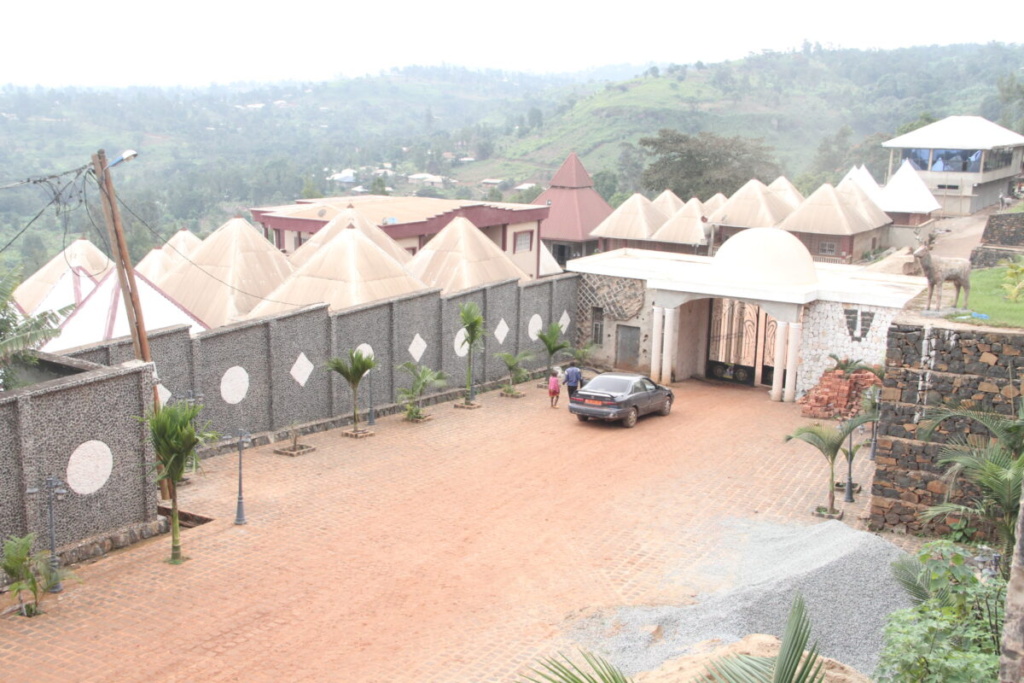
With schoolbooks put away for the long break, the village of Balekouet, nestled among the scenic mountains of western Cameroon, has chosen to give its youth a meaningful holiday experience. In this major chiefdom of the Nkong-Ni Subdivision, Menoua Division, West Region, the holidays are not about idleness but about active community engagement. Since 28 June 2026, the village has been hosting the third edition of its “Useful Holidays” program, a large-scale community initiative that combines sports, environmental sanitation and cultural activities with one common goal: improving the overall health and well-being of the population.
Football and athletics as tools for disease prevention
Under the leadership of His Majesty Kueatsop Tetakeua Pierre Aimé, Chief of Balekouet, the traditional football tournament brought together young people from the village’s 17 neighborhoods, as well as neighboring communities in Baleveng. Beyond entertainment and the race for the championship title currently held by Center FC, the tournament serves as an open-air public health intervention.Bringing together 12 teams divided into two groups, the competition encourages regular physical activity among participants aged 7 to 30. At a time when sedentary lifestyles are becoming increasingly common, football and athletics have emerged as powerful preventive health measures. Regular participation helps reduce the risk of non-communicable diseases such as hypertension, heart disease, type 2 diabetes and obesity. Sport also promotes mental well-being by reducing stress and anxiety while helping prevent depression through the release of endorphins. As 18-year-old Darole Tsakeu explains, “When you take part in these sports activities, it helps you stay healthy.”
Environmental sanitation: another pillar of preventive health
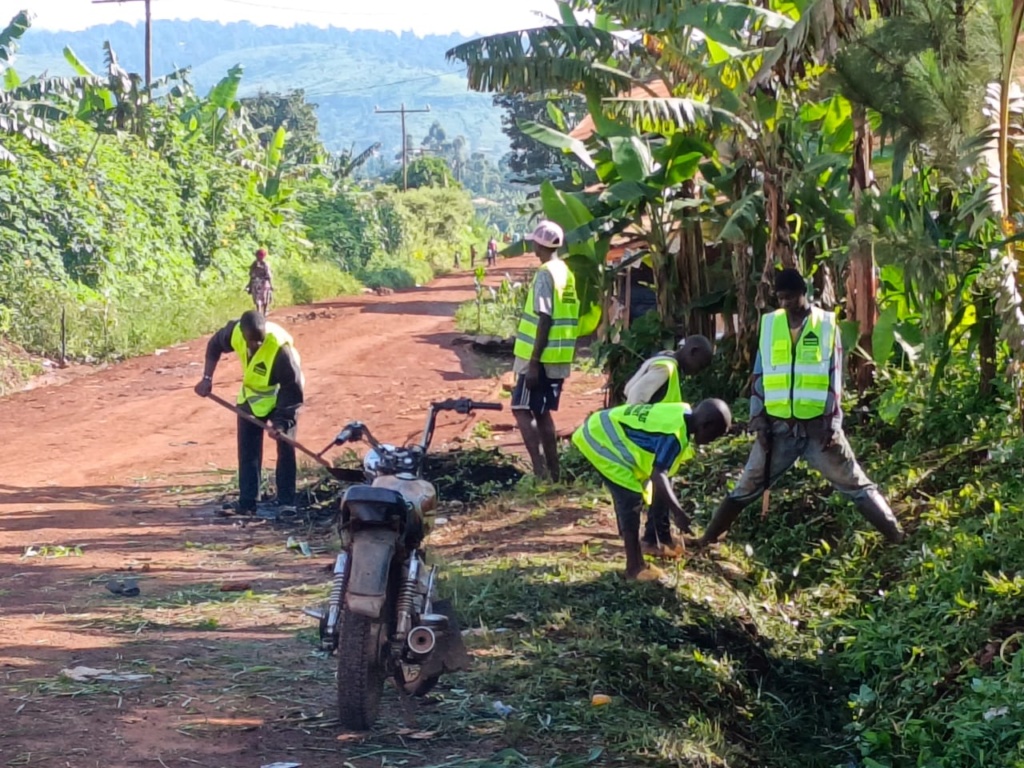
In Balekouet, health is promoted not only on the football field but also throughout the village. Alongside the sporting events, large-scale clean-up and sanitation campaigns have been launched. Around 300 children and young adults are taking part every day in clearing overgrown vegetation and cleaning areas surrounding homes.These hygiene efforts have an immediate impact on community health. By removing stagnant water and overgrown bushes, participants eliminate mosquito breeding sites, helping reduce the risk of malaria, which remains one of Cameroon’s leading public health challenges. Mooh Kemka Nawessi, who coordinates cultural activities, explains: “Our objective is to teach children how to maintain a clean environment in order to protect the village.” Ten-year-old Efrem Dongmo has already embraced this civic responsibility: “I am here to help keep my village clean so that we can protect people’s health.”
Promoting healthy bodies, healthy minds and stronger communities
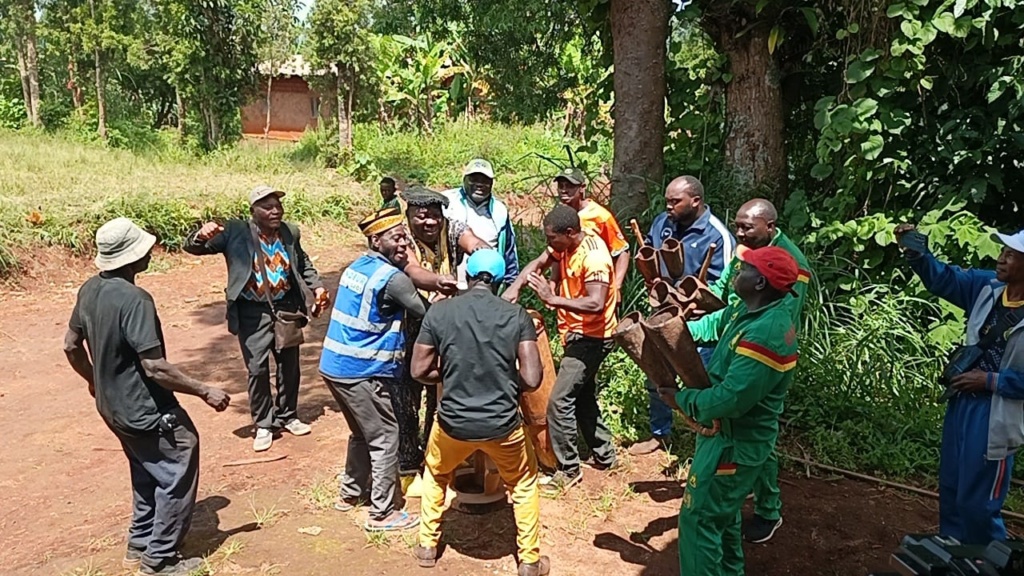
The “Useful Holidays” initiative embraces a holistic vision of well-being. René Demanou Mooh Tekandong, a notable of the chiefdom, says the program seeks to foster peace, development and unity among local youth, young people returning from other parts of Cameroon and members of the diaspora. Activities planned for the coming weeks include lessons in the local language, traditional basket-weaving workshops and, above all, a community health outreach campaign.To conclude the program, the chiefdom will reward participants’ commitment and discipline during the grand finale scheduled for 23 August.
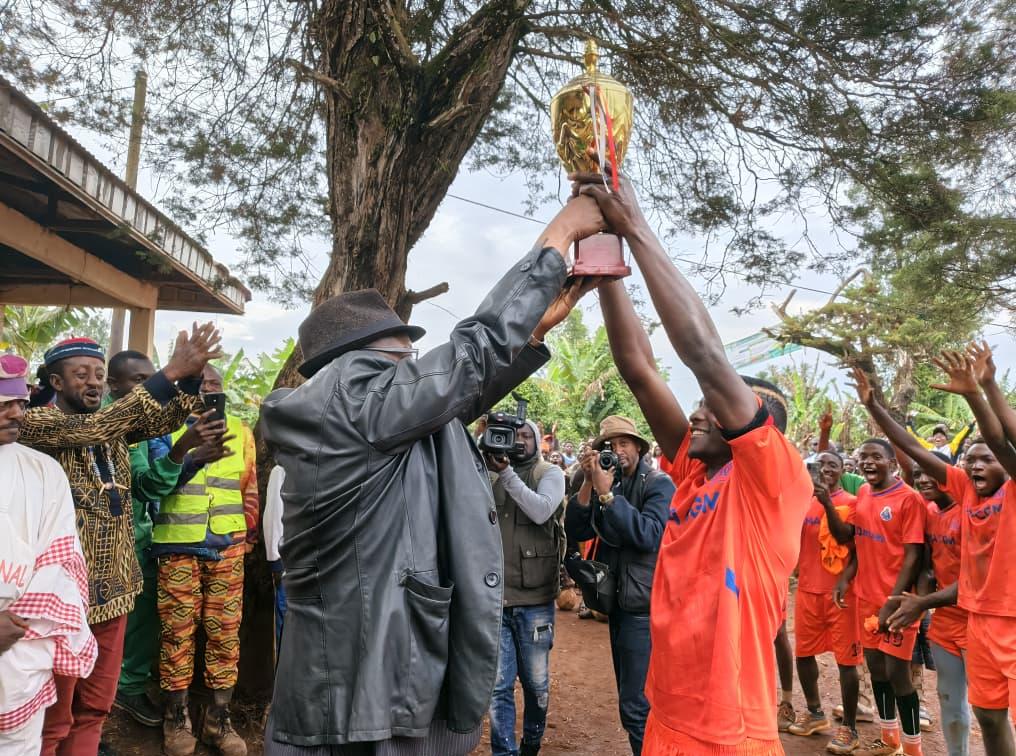
School supplies will be distributed to children, while parents will benefit from free medical consultations and healthcare services. Although challenges remain, including the need to improve local road infrastructure, Balekouet is demonstrating that investing in young people through sports, environmental sanitation and community engagement is one of the most effective ways to build healthier, stronger and more resilient communities.
Patients from the north, long forced to travel to Yaoundé or abroad for neurosurgical care, can now find specialized treatment in Garoua, particularly in the field of neuroscience..
Successful surgery on a teenage girl who was suffering from a tumor on her head
Specialized medicine is undergoing a true revolution in the North region. For decades, neurological and neurosurgical conditions posed a significant challenge for the population. Faced with a scarcity of specialists and suitable medical facilities, families were often forced to undertake long journeys to Yaoundé, or even abroad, at prohibitive costs. This era now seems to be gradually becoming a thing of the past. In Garoua, neuroscience is experiencing remarkable growth and opening a new chapter in the region’s healthcare history.
This progress is driven by the neurosurgery unit at the Garoua Regional Hospital, which is achieving medical feats previously unimaginable in this part of the country. Thanks to investments, the increased skills of the medical teams, and the availability of increasingly advanced technical facilities, complex neurosurgical procedures are now being successfully performed locally.
The recent operation performed by Dr. Ignatius Esene and his team perfectly illustrates this progress. The specialists successfully removed a giant brain tumor from a patient after a particularly delicate procedure. The operation was a success, allowing the patient to begin her recovery process in encouraging conditions. This medical feat quickly gained international recognition. Within specialized circles, it
has generated considerable interest and demonstrates the high level of local expertise. For many observers, this intervention confirms that the Garoua Regional Hospital is now capable of handling highly complex cases that, just a few years ago, would have required medical evacuation. Patients can now receive specialized care close to home, thus reducing expenses related to travel, prolonged hospital stays, and consultations in major urban centers.
The development of neuroscience in the North is not solely based on surgical interventions. It also relies on a growing openness to international scientific cooperation. Most recently, the neurosurgery unit of the Garoua Regional Hospital hosted a neurosurgeon and researcher from Harvard Medical School. This working visit aimed to strengthen scientific exchanges and explore new avenues of collaboration around innovative technologies. Discussions focused in particular on the integration of artificial intelligence solutions designed to improve the diagnosis, surgical planning, treatment, and monitoring of patients suffering from neurological and neurosurgical conditions. The objective is to leverage new technologies to enhance the quality of care while strengthening the capabilities of local medical teams.
Interview : Dr. Ignatius Esene, Neurosurgeon and Head of the Neurosurgery Unit at the Garoua Regional Hospital
« Yes, it can be unequivocally stated that neuroscience now occupies a central place in Garoua.
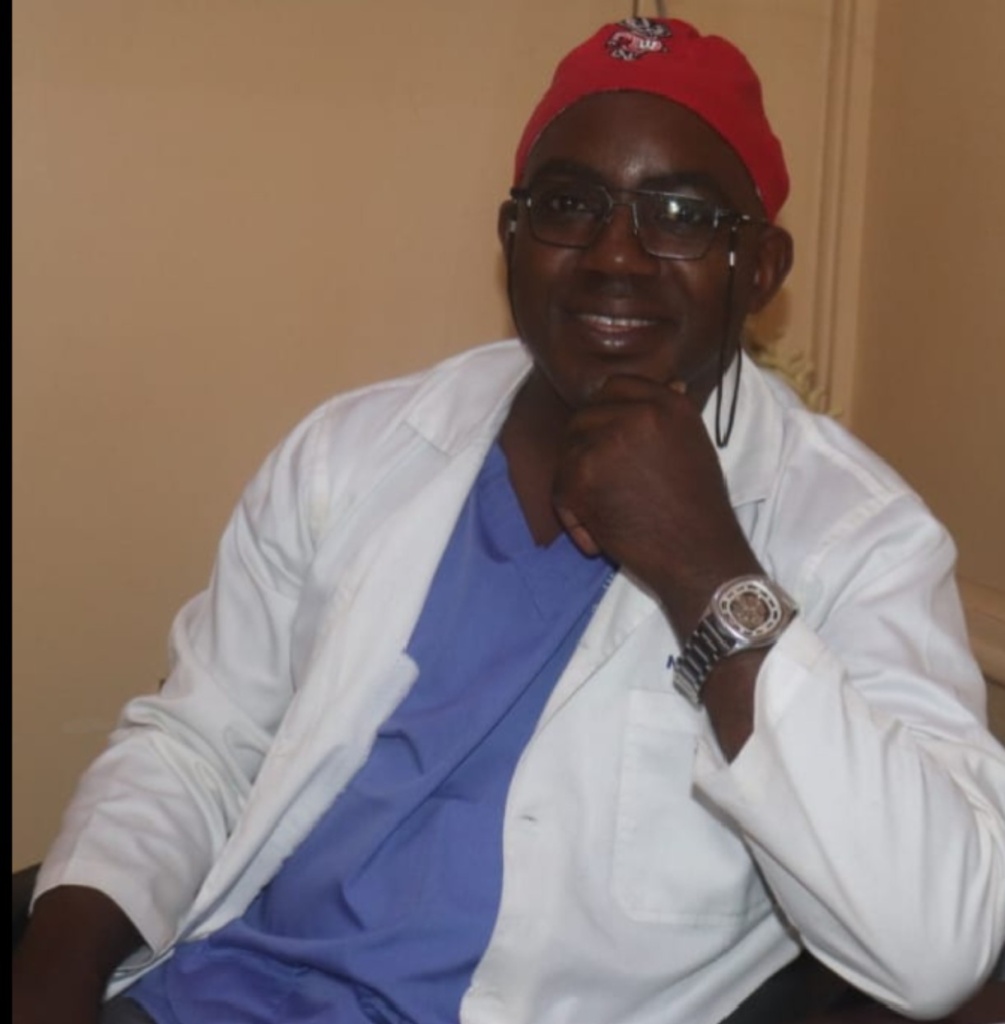
Doctor, recently the Garoua regional hospital hosted a neurosurgeon-researcher from Harvard University, what was the purpose of this visit?
The Harvard Medical School researcher traveled to Garoua as part of strengthening research cooperation between Harvard Medical School and the Neurosurgery Unit of the Garoua Regional Hospital. This partnership focuses on the development and integration of artificial intelligence solutions aimed at improving the diagnosis, treatment, and monitoring of patients suffering from neurological and neurosurgical conditions, thereby contributing to improved quality of care.
What are the different aspects of neurosurgery that the hospital discussed with the researcher?
Today, neurosurgical practice benefits greatly from technological advancements. Artificial intelligence is one of the most promising innovations for optimizing diagnosis, treatment, and patient follow-up. Our collaboration focused on integrating these artificial intelligence tools to improve the quality of care throughout the patient journey, from diagnosis to treatment and post-treatment follow-up. This visit also allowed us to strengthen partnerships previously established within the framework of our joint Global Surgery initiatives.
What was the time period of the researcher’s visit?
This initial mission took place over a three-day period. Further visits are already planned for the near future to further strengthen this partnership and ensure the
continuity of collaborative projects.
Can we say today that neuroscience has found a place in Garoua? If so, what evidence supports this?
Yes, it can be unequivocally stated that neuroscience now occupies a central place in Garoua. The city has become a leading medical center for the Far North of Cameroon as well as for neighboring countries in the treatment of disorders of the central and peripheral nervous system. Several tangible and recent elements attest to this, notably modern infrastructure and cutting-edge technologies, the Best Research in Neurosurgery Award obtained in Dubai (December 2025), the achievement of internationally recognized surgical feats, a strong presence of neuroscience, which is not limited to infrastructure alone, but also extends to research, training and innovation, a comprehensive healthcare offering covering all pathologies of the nervous system, a solid university foundation and a growing sub-regional influence. Thanks to these advances, Garoua is gradually establishing itself as a center of excellence in neuroscience and neurosurgery in Central Africa.